



02 Oct Solar LED Airfield Lighting and Remote Weather Reporting at a South American Airstrip
Project Report — Solar LED Airfield Lighting and Remote Weather Reporting, South America
Installed and commissioned in two days. 80 solar LED runway and taxiway lights. 100% off-grid solar power. ICAO, FAA and Transport Canada compliant.
Overview
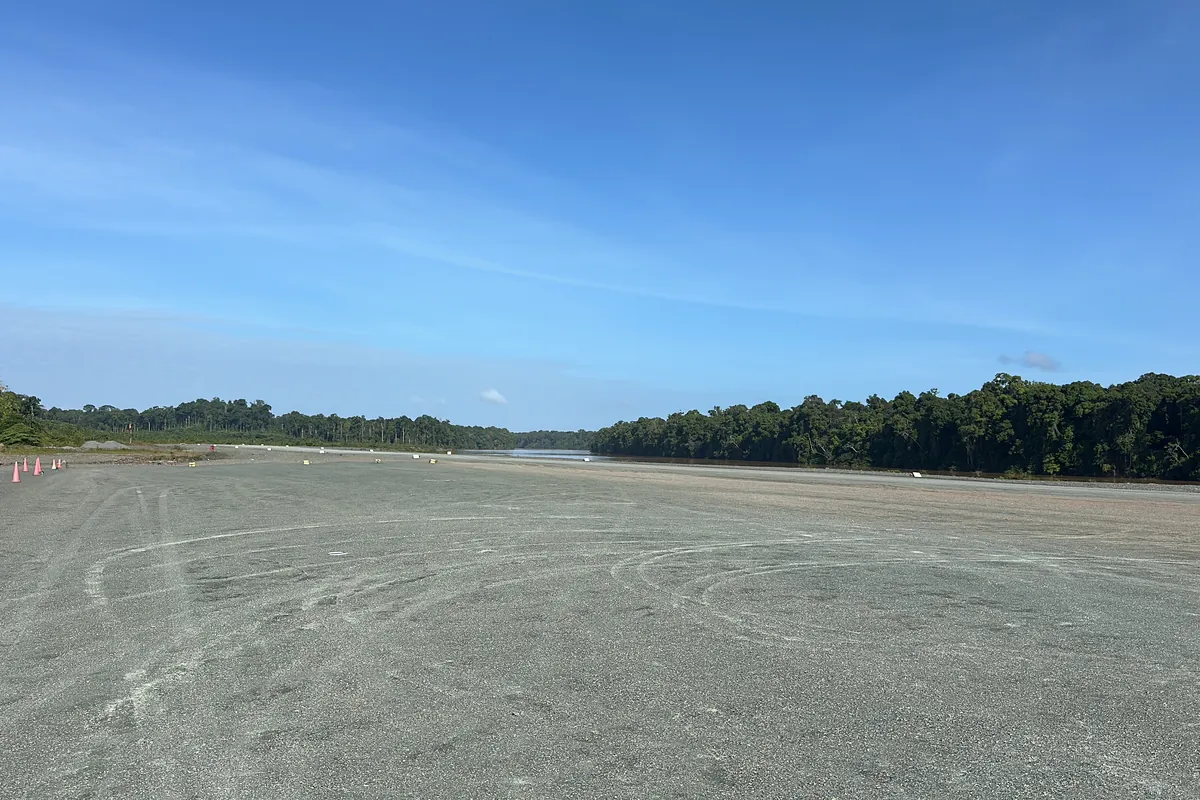
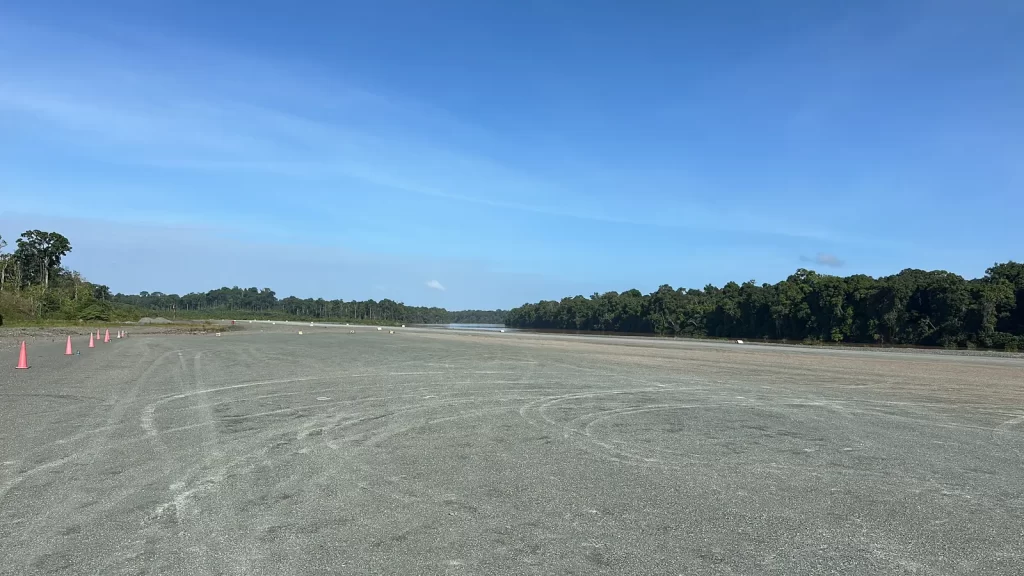
A remote gravel airstrip in South America sits in unbroken rainforest, with no grid power and no link to a national weather network. Flights still depend on it, including night medical evacuation (medevac) missions. On a strip like this, runway lighting and reliable weather data are not extras. They decide whether a flight can go at all.
The airstrip had two long-standing gaps: no automated weather reporting, and no runway lighting for day and night operations. So it brought in Aviation Renewables to close both in one project. The team installed solar LED airfield lighting — 50 A704-VL runway lights and 30 AV70 taxiway lights — alongside an MWS-C600 Micro Weather Station and a Remote Weather Advisory System (RWAS). Installation and commissioning took two days on site.
At a Glance
- 2 days — install and commissioning
- 50 units — A704-VL solar runway lights
- 30 units — AV70 solar LED taxiway lights
- 6,500 ft — cloud height detected from about 35 miles out
Project Snapshot
| Location | Remote airstrip, South America |
|---|---|
| Date | 2026 |
| Equipment | A704-VL solar LED runway lights, AV70 solar LED taxiway lights, MWS-C600 Micro Weather Station, Remote Weather Advisory System (RWAS) |
| Compliance | ICAO, FAA and Transport Canada standards |
| Application | Solar LED airfield lighting and remote weather reporting for an off-grid airstrip |
The Challenge: No Weather Data and No Runway Lighting at a Remote Airstrip
Pilots and ground crews judged the weather by eye. With no on-site weather station, there was no consistent view of cloud height, visibility or other conditions that matter for safe departures and arrivals.
The gap was felt most at night. With no runway lighting after dusk, the strip could not support day and night operations, including medevac flights, exactly when they were often needed.
Remoteness shaped every part of the solution. The new systems had to be:
- Off-grid, because grid power was not a dependable option
- Low maintenance, with no regular on-site technical support
- Durable, on a gravel strip in a humid rainforest climate
That first requirement made renewable, standalone systems a necessity rather than a preference. Conventional airfield lighting needs trenching, cable runs and a power supply. At a site like this, that civil work would cost more and take far longer than the lighting itself.
The Solution: Self-Contained Solar Runway Lights and Automated Weather Reporting
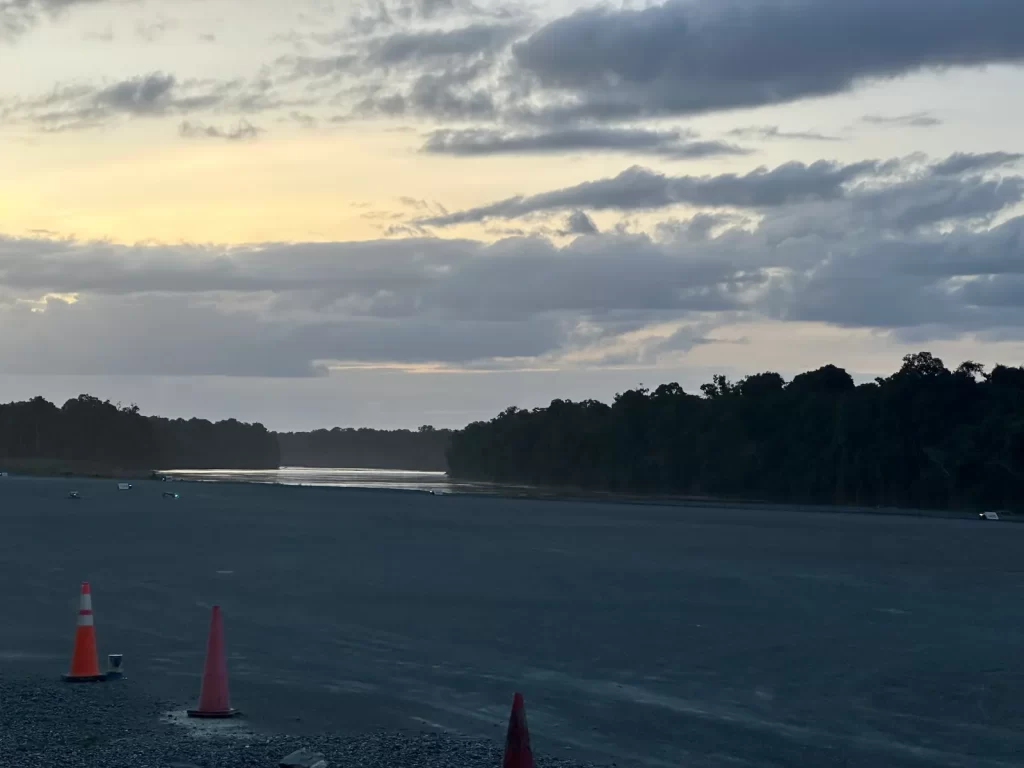
Aviation Renewables designed a package built entirely around solar power and remote monitoring, matched to the airstrip’s operations and site conditions. Every light runs independently, so no trenching, wiring runs or grid tie-in were needed.
Scope of Work
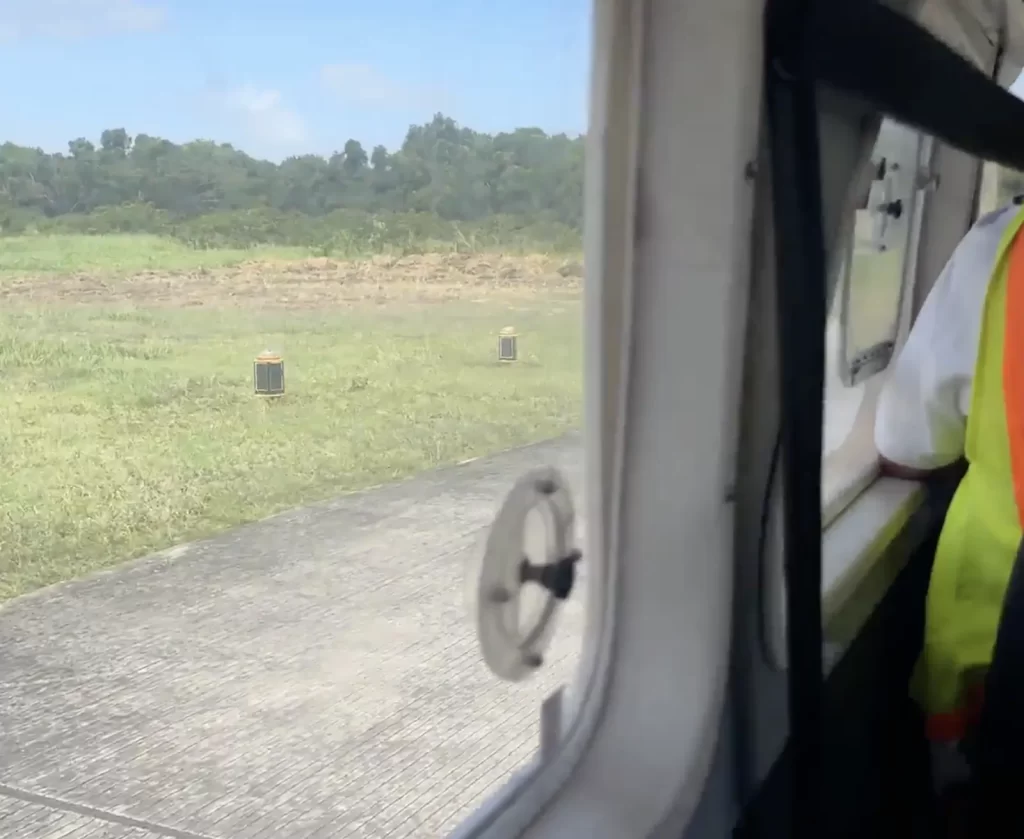
- A704-VL Solar Runway Lights
- The team installed about 50 solar A704-VL runway lights along the gravel runway. Each unit carries its own solar panel and power storage, and was positioned, anchored and commissioned on its own.
- AV70 Solar LED Taxiway Lights
- Thirty AV70 solar LED taxiway lights now mark the apron and taxiway for ground movements in low light and at night.
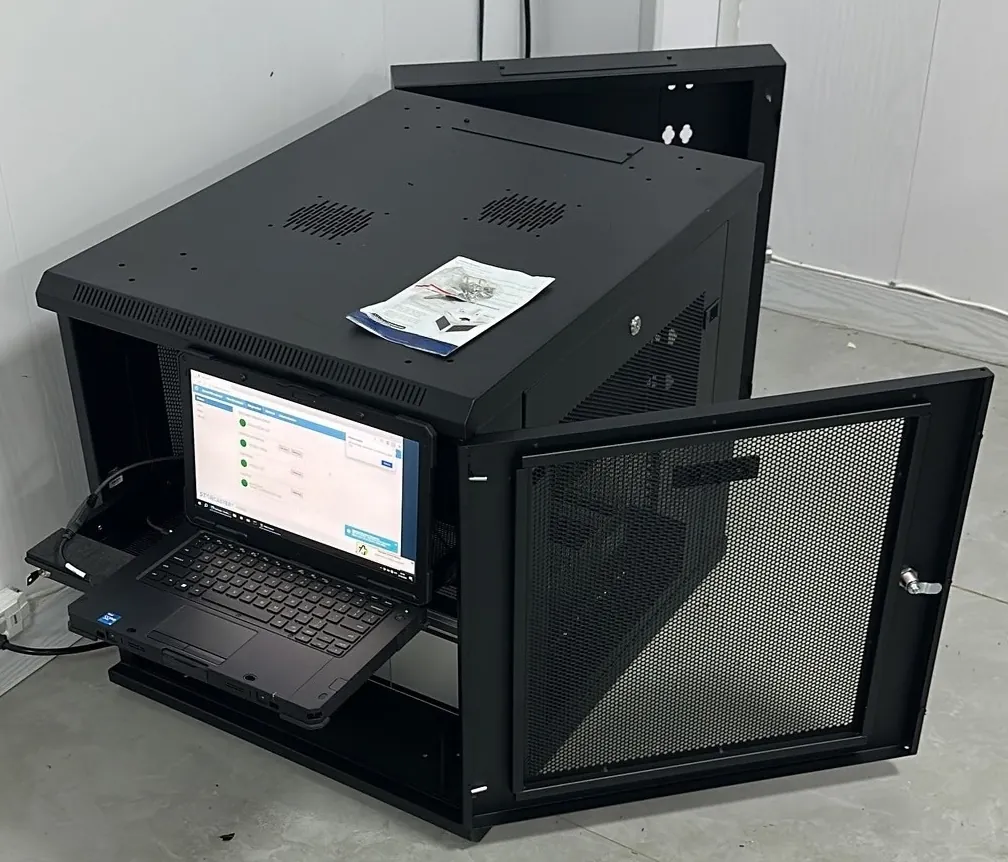
- MWS-C600 Micro Weather Station
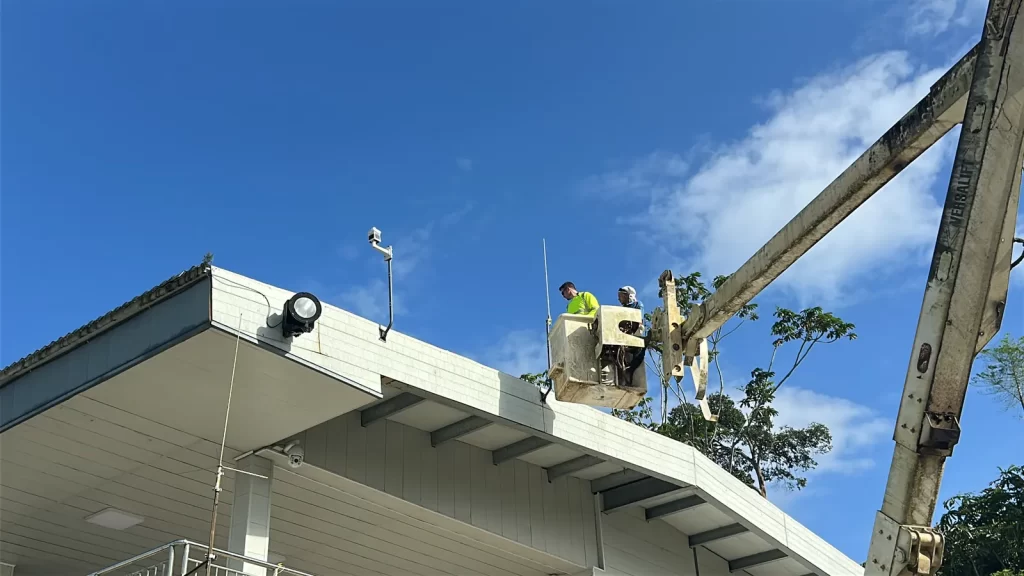
- The weather station includes an integrated LIDAR ceilometer. It delivers real-time cloud height, visibility and standard meteorological readings.
- Remote Weather Advisory System (RWAS)
- RWAS broadcasts current conditions to pilots and operations staff as an automated VHF radio message. This closes the gap left by having no weather network connection.
- Site-Matched Installation and Training
- Every unit was placed to suit the airstrip’s layout and solar exposure. Site personnel were trained on day-to-day operation.
Because each system is self-contained, the full installation took two days. See the full range of solar LED airfield lighting, including A704-VL runway lights and AV70 taxiway lights.
Outcomes: Real-Time Weather Data and Night Operations in Two Days
For the first time, the airstrip has an on-site source of real-time weather information. Pilots and operators now have instrumented data for go/no-go decisions.
In one recorded observation after commissioning, the system detected cloud height at 6,500 feet from roughly 35 miles out. That is well ahead of what a visual report could offer. The airbase’s chief pilot, who also flies night medevac missions, called it “a great step ahead” over visual reports alone.
The solar runway and taxiway lights extend safe operating hours into low-light and nighttime conditions. Because every system runs on solar power, the upgrade needed no grid connection and carries low ongoing maintenance.
Why this Project Matters
A remote airstrip can close critical safety gaps without grid extensions or diesel generators. Aviation Renewables combined solar LED airfield lighting with automated weather reporting in one coordinated upgrade. As a result, the strip gained runway lighting and weather awareness in two days.
The same approach suits remote and off-grid airstrips across the United States and Canada. These include mine and exploration camps, northern and fly-in communities, forestry and energy strips, and private airfields where downtime carries a direct operational cost.
Frequently Asked Questions
What is solar LED airfield lighting?
Solar LED airfield lighting uses self-contained runway, taxiway and apron lights, each with its own solar panel, battery and LED source. It needs no cabling, trenching or grid power, which suits remote and off-grid airstrips.
How long does it take to install solar runway lights?
Because each light is independent, installation is fast. At this airstrip, 50 runway lights, 30 taxiway lights and a full weather station were installed and commissioned in two days.
Do solar airfield lights work on gravel runways?
Yes. This project installed A704-VL runway lights and AV70 taxiway lights along a gravel strip and apron, anchored in place without any wiring runs.
Are solar runway lights ICAO, FAA and Transport Canada compliant?
They can be, depending on the product. The A704-VL runway lights and AV70 taxiway lights used in this project comply with ICAO, FAA and Transport Canada standards.
How does a remote airstrip get weather reports without a weather network?
An on-site weather station such as the MWS-C600 measures cloud height, visibility and other conditions. A Remote Weather Advisory System then broadcasts that data to pilots over VHF radio.
Planning Solar LED Airfield Lighting for Your Airstrip?
Aviation Renewables supplies and installs ICAO-, FAA- and Transport Canada-compliant solar runway lights, taxiway lights and automated weather reporting for airports, remote airstrips and industrial sites.
Talk to our team about your runway →
arc@aviationrenewables.com
+1 (250) 590 1272
Download the full Solar LED Airfield Lighting and Remote Weather Reporting Project Report (PDF, 3 pages) for site photos and the complete scope of work.
Sorry, the comment form is closed at this time.