



18 Sep Solar LED PAPI Replacement at a Remote Mine Airstrip
Project report — 2-box Solar Series LED PAPI, West Africa, 2026
Installed and commissioned in three days. 100% of existing foundations reused. 100% off-grid solar power.
Overview
A working mine site in West Africa depends on its private airstrip. Personnel and equipment move on a tight, predictable schedule. On a strip like this, a functioning precision approach path indicator (PAPI) is not a convenience. It is part of what keeps daily flight operations safe and repeatable.
Weather and environmental exposure had damaged the site’s existing PAPI beyond reliable use. So the mine brought in Aviation Renewables to replace it with a new 2-box Solar Series LED PAPI, paired with a Solar Series Power System. The team reused the existing concrete foundations and rewired the system to suit the new units. Installation and commissioning took three days on site.
At a glance
- 3 days — install and commissioning
- 2-box — Solar Series LED PAPI (APAPI)
- 100% — existing foundations reused
- 100% solar — off-grid power system
Project Snapshot
| Location | Mine site airstrip, West Africa |
|---|---|
| Date | 2026 |
| Client | Private mine site (confidential) |
| Equipment | 2-box Solar Series LED PAPI with Solar Series Power System |
| Application | LED PAPI replacement for a remote mine airstrip |
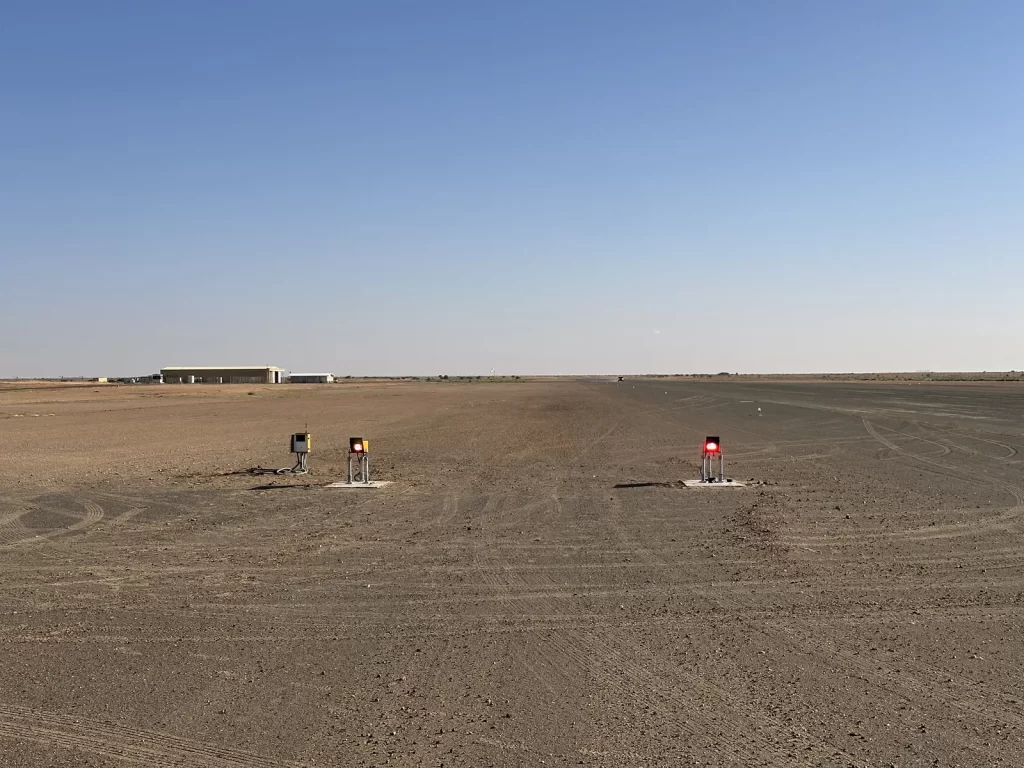
The Challenge: a damaged PAPI at a remote airstrip
For a working mine, any gap in approach guidance constrains flight operations directly. That means it also constrains the movement of people and supplies.
The airstrip’s original PAPI had supported approach guidance for incoming flights. But sustained weather and dust exposure had degraded the units, and the site could no longer rely on them.
Remoteness shaped every part of the solution. A replacement system had to be:
- Efficient to install, because mobilization windows are short and expensive
- Reliable in the field, with minimal dependence on technical support visits
- Able to reuse what was already in the ground, because crews truck or fly in every cubic metre of concrete
That last requirement separates a remote-site PAPI replacement from a standard one. Civil works — excavation, forms, concrete, cure time — routinely cost more than the lighting equipment itself. They also take longer, especially when the nearest supplier sits hundreds of kilometres away.
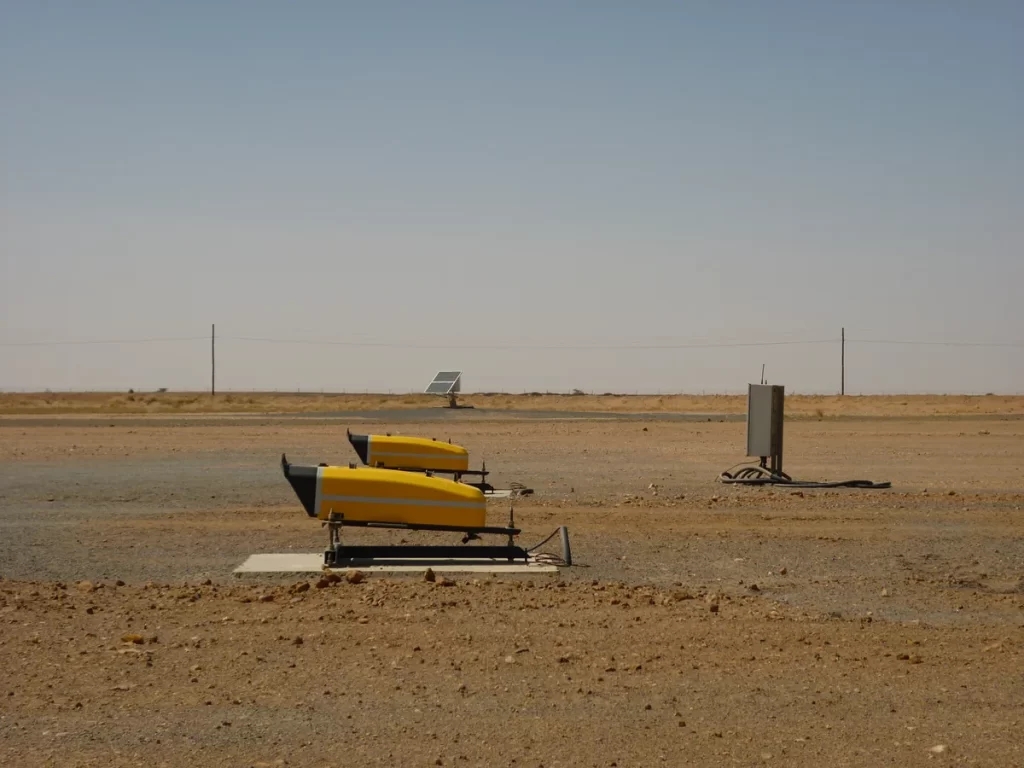
The Solution: a 2-box solar LED PAPI on existing foundations
Aviation Renewables supplied a new 2-box Solar Series LED PAPI with a Solar Series Power System. An installation team then travelled to site to carry out the work.
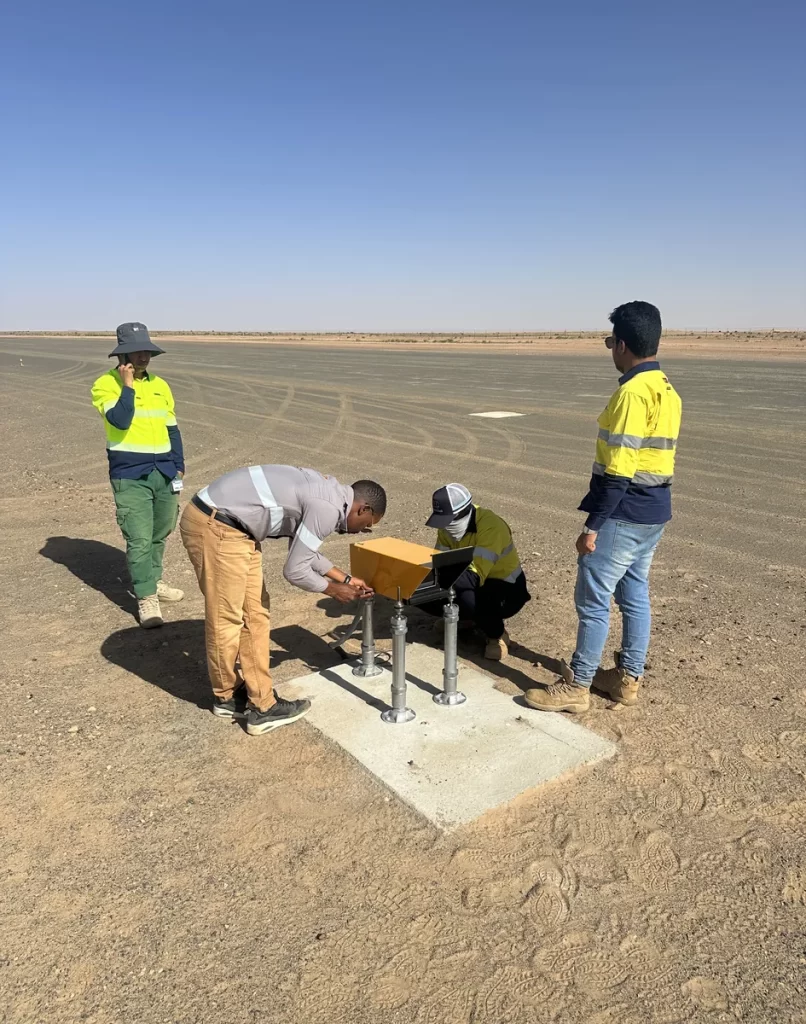
Scope of work
- Foundation reuse
- The team assessed the existing concrete foundations and reused them. This avoided the cost and schedule impact of new excavation and concrete work.
- Rewiring
- The new LED PAPI units and power system needed a different wiring configuration. So the team rewired the system to match the new equipment, leaving the foundations in place.
- On-site installation and commissioning
- Aviation Renewables’ technicians completed the full installation and commissioning in three days on site.
Reusing the foundations while updating the wiring gave the mine a modern, solar-powered PAPI. It avoided the added cost and downtime of a completely new installation.
Outcomes: approach guidance restored in days, not weeks
The airstrip regained reliable, solar-powered PAPI guidance within three days of the team arriving. This kept the operational impact of the outage to a minimum.
Reusing the existing foundations kept the replacement cost-efficient. The mine still received a fully updated LED PAPI and power system, suited to remote, off-grid conditions.
Because the system runs on solar power, ongoing maintenance requirements are low. That matters at a site with no easy access to grid power and no frequent technical support. Here, every service visit has to be planned and flown in.
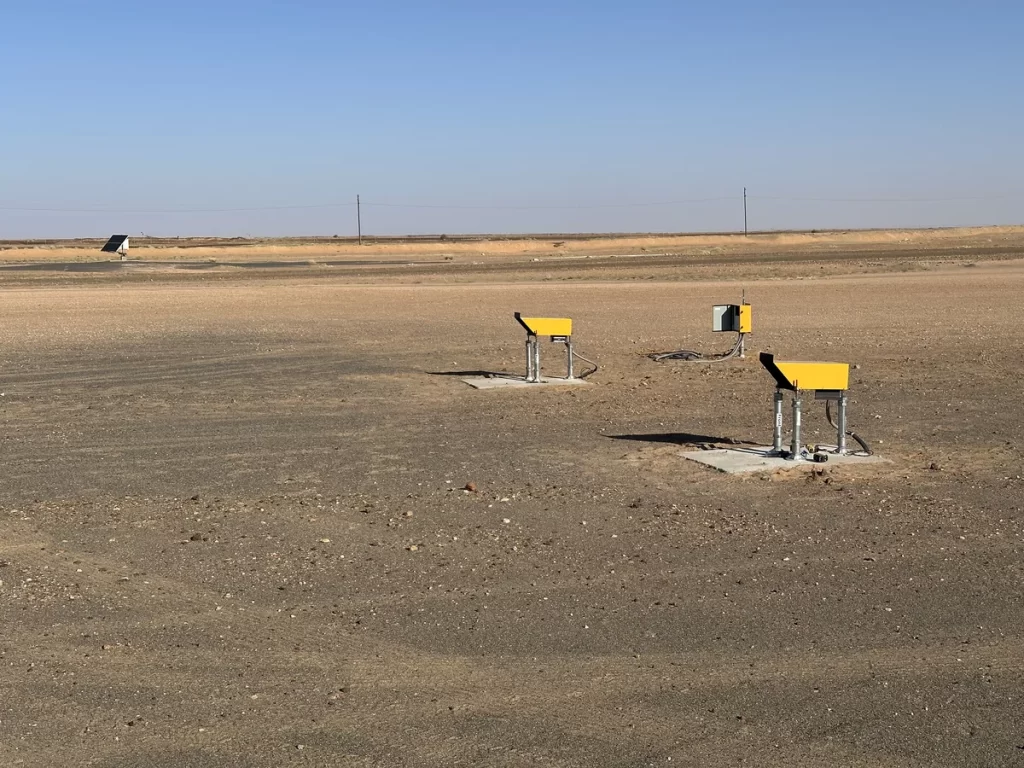
Why this project matters
A remote site can replace a damaged approach lighting system quickly, without discarding the infrastructure already in the ground. Aviation Renewables reused the airstrip’s foundations and adapted the wiring to the new Solar Series LED PAPI. As a result, critical approach guidance returned in days rather than weeks.
The same approach suits remote and off-grid airstrips across North America. These include mine and exploration camps, northern and fly-in communities, forestry and energy strips, and private airfields where downtime carries a direct operational cost.
Planning an LED PAPI replacement or upgrade?
Aviation Renewables supplies and installs solar and AC-powered LED PAPI systems for airports, remote airstrips and industrial sites.
Talk to our team about your runway
arc@aviationrenewables.com
+1 (250) 590 1272
There’s more detail than fits on a page. Download the full Solar LED PAPI (APAPI) lighting Project Report (PDF, 3 pages) for the complete specification, site photos, and system schedule.
Sorry, the comment form is closed at this time.